
CONTENT MARKETING
Create Content That Connects, Engages & Converts.
Build a stronger brand presence with meaningful content designed to attract the right audience, communicate your value, and support long-term business growth.
Content is more than words, images, or social media posts. It is one of the most important ways your business communicates with its audience. A well-planned Content Marketing strategy helps your brand provide useful information, answer customer questions, demonstrate expertise, and build stronger relationships with potential customers.
I create content strategies that are aligned with your business goals, audience interests, brand identity, and digital marketing objectives. From website content and blogs to social media posts and SEO-focused content, every piece is developed with a clear purpose.
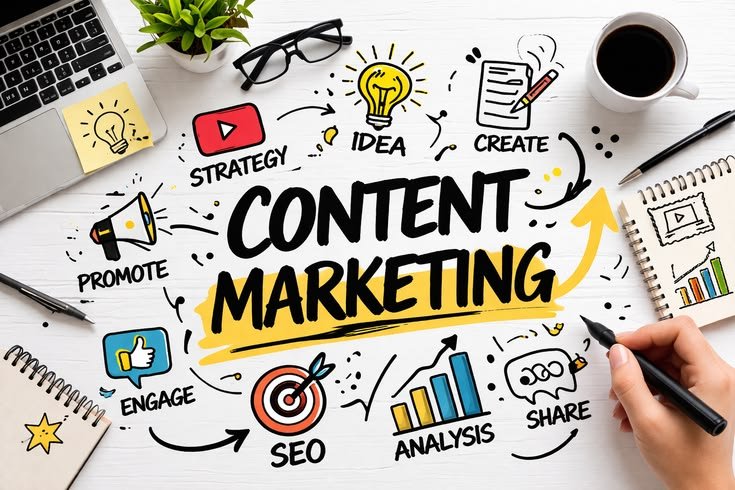
What Is Content Marketing?
Content Marketing is a strategic approach to creating, publishing, and distributing valuable and relevant content to attract, engage, and retain a clearly defined audience. Instead of simply promoting a product or service, Content Marketing focuses on providing information and experiences that are useful to your audience. This can help a brand build awareness, establish credibility, communicate its expertise, and stay connected with potential and existing customers. My Content Marketing service begins with understanding your business, target audience, industry, competitors, brand voice, and marketing goals. Based on these insights, I develop a content strategy that identifies what type of content your audience needs, which topics are relevant, and where that content should be published.
What My Service Includes
A Complete Content Strategy Built Around Your Brand
Content Strategy & Planning
I develop a content strategy based on your business objectives, audience, industry, brand identity, and marketing goals. A clear strategy helps ensure that every piece of content has a specific purpose.
Audience Research
Understanding your audience is essential for creating relevant content. I consider their interests, questions, challenges, needs, and online behavior to help develop content that connects with the people you want to reach.
Content Calendar
A structured content calendar helps organize topics, formats, publishing schedules, campaigns, and important dates. It creates consistency and makes content planning more manageable.
Website Content
Your website is often one of the first places potential customers interact with your brand. I create clear and engaging content for pages such as Home, About, Services, Landing Pages, and other important website sections.
Social Media Content
I create content ideas and copy designed for social media platforms, including educational posts, promotional content, engagement-focused posts, brand stories, informative content, and campaign-based content.
SEO-Focused Content
Content can be strategically developed around relevant topics, keywords, and search intent to support your organic search strategy while keeping the content natural, useful, and audience-focused.
CONTENT MARKETING CONTENTS
Attract The Right Audience
Create useful and relevant content that helps your brand reach people who are genuinely interested in your industry, products, services, or expertise.
Build Brand Awareness
Consistent content gives your brand more opportunities to communicate its identity, values, expertise, and unique perspective across digital platforms.
Educate & Inform
Useful content can answer questions, explain complex topics, solve problems, and help your audience understand how your products or services can support their needs.
Build Trust & Credibility
Consistently sharing valuable information can help demonstrate knowledge and create a more meaningful relationship between your brand and its audience.
Encourage Engagement
Content can start conversations, encourage interaction, invite opinions, answer questions, and create opportunities for your audience to engage with your brand.
Support Customer Decisions
Different people need different information before making a decision. Strategic content can help guide audiences from initial awareness to consideration and eventually toward taking action.
FAQ
What is Content Marketing?
Content Marketing is the process of creating and distributing valuable, relevant, and useful content to attract, engage, and retain a target audience. It can include website content, blogs, social media posts, educational content, videos, emails, guides, and other digital formats.
How can Content Marketing help my business?
Content Marketing can help improve brand awareness, communicate your expertise, educate your audience, support SEO, increase engagement, generate website traffic, and strengthen relationships with potential and existing customers.
What types of content do you create?
Content can include website copy, blog articles, social media content, educational posts, promotional content, SEO-focused articles, brand storytelling, email content, campaign content, and content ideas depending on your business requirements.
How do you decide what content my business needs?
I consider your business goals, target audience, industry, competitors, brand identity, customer questions, marketing objectives, and available platforms. These insights help determine which topics, formats, and content types are most relevant to your strategy.
How often should a business publish content?
There is no single publishing frequency that works for every business. The ideal schedule depends on your goals, audience, platforms, resources, and content strategy. Consistency and quality are generally more important than publishing content simply for the sake of frequency.
Can Content Marketing improve SEO?
Yes. Useful, relevant, well-structured content can support an SEO strategy by targeting relevant topics and search intent, answering audience questions, creating opportunities for internal linking, and providing valuable information for website visitors.
How long does Content Marketing take to show results?
Content Marketing is generally a long-term strategy. Results can vary depending on the type of content, industry, audience, distribution channels, competition, consistency, and overall marketing strategy. Some content may generate engagement quickly, while other content can continue providing value over a longer period.
How do you measure Content Marketing performance?
Performance can be evaluated using relevant metrics such as reach, engagement, website traffic, clicks, shares, time spent on content, leads, conversions, and other business-specific indicators where tracking is available. The appropriate metrics depend on the purpose of the content and the campaign.